
HootDex Logo

Where Risk Meets Opportunity, Growth Takes Flight

Explore The Value of HootDex

HootDex Quick Updates
Update – Aug 11, 2026 – System Stress Test Update

Update – Aug 10, 2026

Update – July 23, 2026

Tokens Added – July 22, 2026

July 21, 2026 – HootDex FIX API

HootDex Update – 9 July 2026

HootDex is rolling out an upgrade to its treasury reporting system, ensuring every token on the platform displays transparent, on‑chain collateral backing through the Pecu Novus digital asset treasury. These improvements will appear across HootDex throughout the week as part of our commitment to clearer, verifiable token data.

XMG Prime & Apex Yield Tokens Being Added to HootDex (June 6, 2026)

A series of XMG Apex Yield Tokens (XAYT) and XMG Prime Yield Tokens (XPYT) are now being added to HootDex, expanding the Digital Credit Note token ecosystem with two fully PNP16 and ERC‑20 compliant yield instruments.

Over the coming week, formal pricing will be initiated for each DCN, and until that process begins, there will be no active price discovery on the platform. Both yield tokens will distribute returns hourly, and all trading will occur strictly on an OTC basis, ensuring proper suitability and institutional‑grade handling. While secondary market opportunities may emerge away from HootDex over time, XAYT and XPYT will always retain the same smart‑contract data, functions, and treasury‑backed structure, regardless of where qualified counterparties choose to transact.

XMG Token Recalibration Notice (June 27, 2026)

XMG Tokens are undergoing a scheduled pricing recalibration today to support continuous 24/7/365 real‑time valuation across all XMG asset classes. During this maintenance window, from 10:30am to 12:30pm GMT, some dashboards and market feeds may temporarily display incorrect or incomplete pricing data.

This recalibration ensures that every XMG Token—USXM, UKXM, EUXM and others—remains fully synchronized with live composite pricing and DAT‑backed valuation at all times. All collateral, balances, and positions remain safe and unaffected.

CryptoPairs Renamed to Hybrid Tokens

HootDex is entering its next phase of institutional alignment with the transition from CryptoPairs to Hybrid Tokens, a naming evolution that reflects the platform’s growing sophistication and the expanding role these assets play across global markets. While the name is changing, the underlying structure, mechanics and on‑chain behavior of each asset remain exactly the same. Hybrid Tokens continue to deliver the same transparent, self‑custodied, smart‑contract‑driven exposure that traders rely on,  now with terminology that better matches the expectations of institutional desks, structured‑product teams and cross‑asset analysts.

The shift to Hybrid Tokens is designed to more accurately describe what these instruments represent: a dual‑asset synthetic exposure that blends Bitcoin with a second asset such as a fiat currency, commodity or digital asset. The term “Hybrid” is widely used in institutional finance to describe cross‑asset structures, hybrid notes and multi‑factor derivatives, making it a natural fit for the products already trading on HootDex. This naming update brings the platform’s terminology in line with the language used by global trading desks, risk managers and portfolio strategists.

Importantly, nothing changes in how these tokens function. Hybrid Tokens still operate through the same decentralized CLOB architecture, the same transparent pricing logic and the same non‑custodial settlement model that defines HootDex. They remain fully on‑chain, fully self‑custodied and fully decentralized, with no intermediaries, no custodial risk and no operational changes for traders. The update is purely semantic, reflecting the platform’s evolution and its commitment to clarity, precision and institutional‑grade standards.

As HootDex continues to expand its global footprint, the move to Hybrid Tokens strengthens the platform’s positioning among professional traders, liquidity providers and institutions seeking transparent and high‑integrity digital market infrastructure. It also sets the stage for future cross‑asset products, deeper integrations and broader adoption across both traditional and digital markets.

HootDex Announces Tokenized Perpetuals Launching (June 2, 2026)

HootDex is preparing to introduce a major expansion of its trading ecosystem with the rollout of tokenized perpetual futures across cryptocurrencies, commodities and equities and the process begins in July 2026 with expected live in August 2026. This upgrade will bring markets such as BTC‑PERP, ETH‑PERP, XAU‑PERP, WTI‑PERP, AAPL‑PERP and TSLA‑PERP directly into the HootDex Central Limit Order Book, giving traders unified access to multi‑asset perpetual exposure with deterministic settlement and high‑fidelity pricing.

Each perpetual market will be tokenized on the Pecu Novus blockchain, enabling positions to move freely across the Pecu Novus ecosystem while remaining ERC‑20 compatible and fully PNP16 compliant. This means perpetual positions will not only trade on the CLOB but will also exist as transferable, composable on‑chain assets that can integrate with wallets, vaults and broader Pecu Novus applications.

To enhance trader protection, HootDex is introducing an integrated Insurance Policy built directly into the CLOB. If a position’s losses exceed the Minimum Margin Requirement, the system absorbs the excess loss, ensuring that traders cannot lose more than their posted collateral. This creates a safer, more predictable environment for leveraged trading across all supported asset classes.

This launch marks a significant step forward for on‑chain derivatives, combining tokenized portability, deterministic execution and institutional‑grade risk controls. Additional details, including market specifications, leverage tiers, and technical documentation, will be shared in the coming weeks as HootDex approaches the August 2026 rollout.

HootDex System Update May 28, 2026

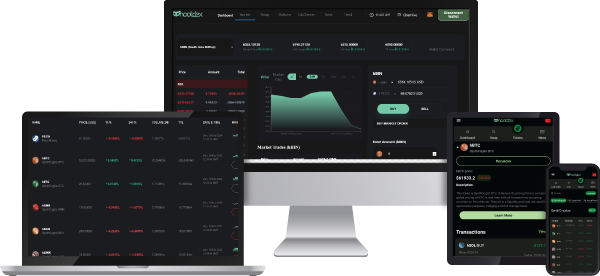
HootDex is currently integrating a series of platform upgrades that will gradually update the user interface for retail traders. These improvements are part of our ongoing commitment to deliver a faster, more intuitive and more powerful decentralized trading experience across the ecosystem.

As these enhancements roll out, users may notice visual changes, layout adjustments and new interaction flows designed to improve clarity, reduce friction, and support smoother navigation. These updates are essential for strengthening overall system performance, optimizing responsiveness and preparing the platform for upcoming features and expanded functionality.

All trading operations will remain fully supported throughout the upgrade process and we will continue to provide updates as each enhancement goes live. Our goal is to ensure a seamless transition while delivering a significantly improved experience for every user.

XMG Token Series Major Update (March 10, 2026)

We’re introducing a major evolution across the XMG token series.

All XMG tokens, such as the USXM stabelcoin and AUXM gold exposure token, are now modular.

So what does that actually mean?

Verified institutions can now issue their own version of XMG tokens within their ecosystem using issuer identifier keys, giving them direct control over:

Cash-in / cash-out rails

Issuance and redemption

Counterparty validation

This is a critical step forward for trust and security.

It ensures that no institution can service or represent a token like USXM unless it was issued by them or an approved partner, effectively reducing fraud and eliminating unauthorized activity at the infrastructure level.

At the same time, we’ve preserved what matters most, liquidity and interoperability.

All institution-issued tokens remain one-way fungible with the primary XMG token, meaning they can always flow back into the main network. And where appropriate, they can be made bilaterally fungible at the discretion of the issuing institution.

In simple terms:You get control without fragmentationYou get security without sacrificing liquidity

This upgrade bridges institutional requirements with decentralized efficiency, bringing structure, identity and trust into tokenized financial ecosystems.

The XMG framework continues to evolve toward a more secure, scalable and institution-ready future.

Market News

  • investingLive Asia-Pacific market news: Gold down, Bitcoin up
    by Eamonn Sheridan on August 25, 2026 at 3:34 am

    Bitcoin jumps above US$80K for the first time in 3 monthsJapan to weigh tax incentives for retail JGB investors, Katayama saysGold has been slammed down $50 and oil has jumpedOil is still quietly crossing Hormuz, TotalEnergies CEO saysRBA minutes reveal live debate over a pre-emptive August hikeChina leans hardest against yuan gains in six months, AUD softensCiti lifts near-term gold target to $4,800, JPMorgan flags $5kBank of Korea rate call a coin toss as economists split on August hikePBOC sets USD/ CNY central rate at 6.7852 (vs. estimate at 6.7219)Asian equites shunted lower at opening, South Korea and Japan both downGold holds near three-month high as debasement trade returnsLegendary investor Druckenmiller says Treasury is suppressing the bond market's warning signalMUFG sees yen risk skewed weaker despite 80% BOJ hike oddsTanker struck by projectile off Oman, UKMTO saysWaking up? Catch up time! Bessent softens Iran sanctions tone as Treasury's yield fix unravelsDollar slips to lowest since May as Treasury doubles bond buybacks, what's next?BOJ likely to hike next month and again in January, says ex-board memberIts the Toothless vs. the Clueless. SEC to investigate Situational Awareness near collapse.Oil slips over $2 as traders shrug off fresh US sanctions on IranICYMI - Morgan Stanley lifts Brent forecast to $100 as oil market tightensBroader US stocks close lower with Chip/AI stocks under pressureinvestingLive Americas market news wrap: Trump and Canada trade threatsSummary:A tanker was struck by a projectile off Oman while transiting a US-protected lane, according to UKMTO, even as Pakistan's Interior Minister Mohsin Naqvi reported significant progress in talks with Iranian leadership; oil eked out a small gain on the sessionGold pushed above $4,690, approaching resistance near the $4,700 round number, before dropping sharply to below $4,640 with no clear catalyst identified for the reversalStanley Druckenmiller, described as a mentor to both Treasury Secretary Scott Bessent and Fed Chair Kevin Warsh, wrote in the Wall Street Journal criticising Treasury's recent bond buyback push to suppress long-term yieldsThe RBA minutes confirmed the board held rates unanimously at 4.35% in August, judging policy already restrictive enough for now while flagging upside inflation risks and readiness to hike again if neededFormer BOJ board member Seiji Adachi told Bloomberg the BOJ will likely hike next month and again as early as January, warning a hold could reignite yen weakness and faster import-driven inflationMUFG said September BOJ hike odds have climbed to around 80% without generating yen buying, arguing the move reflects market pressure on the BOJ rather than its own guidanceThe PBOC set its yuan midpoint 633 pips weaker than a Reuters estimate, the largest weak side deviation since February 27, with the Australian dollar among the currencies to weaken in responseCanadian government ministers are due to announce a response to US tariffs at 1100 US Eastern time, 1500 GMT, on Tuesday Oil edged marginally higher on the session, supported by a mix of geopolitical developments that offered no clear net direction. UKMTO reported a tanker had been struck by a projectile off Oman while transiting a US-protected lane, keeping shipping security risk in focus. Offsetting that, Pakistan's Interior Minister Mohsin Naqvi said talks with Iranian leadership had made significant progress, a development that, if it holds, would point toward de-escalation rather than further disruption.Gold had a volatile session, briefly pushing above $4,690 an ounce and approaching resistance at the $4,700 round number before reversing sharply to trade below $4,640, with no clear catalyst identified for the move. The broader rally that has taken gold to its highest level since mid-May remains intact, with the metal continuing to draw support from renewed fiscal sustainability concerns following the apparent failure of the Treasury's bond market intervention to durably lower yields, a dynamic that has reinforced demand for bullion as an alternative store of value even as the day's price action showed how quickly sentiment can swing without an obvious trigger.That fiscal debate found a prominent voice in Stanley Druckenmiller, who wrote in the Wall Street Journal criticising the Treasury's recent moves to suppress long-term bond yields. Druckenmiller, who has mentored both Treasury Secretary Scott Bessent and Federal Reserve Chair Kevin Warsh, argued the approach amounted to price management rather than genuine liquidity support. His view reflects a broader institutional debate over whether such intervention is sustainable, with proponents of that reading arguing it points toward a continuation of the dollar debasement trade and further upward pressure on yields should Treasury persist with the strategy.Central bank developments were a significant feature of the session. Minutes from the Reserve Bank of Australia's August meeting confirmed the board held the cash rate unchanged at 4.35%, judging that policy already sat at a sufficiently restrictive level while explicitly flagging that risks to the inflation outlook remain skewed to the upside and that it stands ready to hike further if those risks materialise.In Japan, former Bank of Japan board member Seiji Adachi told Bloomberg he expects the BOJ to raise rates next month and again as early as January, warning that a decision to hold steady could reignite yen weakness and add to import-driven inflation pressure. MUFG offered a related but distinct read, noting that market pricing for a September hike has climbed to around 80% without generating corresponding yen buying, a disconnect the bank said suggests the shift reflects pressure on the BOJ from the market rather than a result of the central bank's own communication, leaving near-term yen risk skewed to the downside.Elsewhere in Asia, the People's Bank of China set its yuan midpoint 633 pips weaker than a Reuters estimate, the largest weak side deviation from market expectations since February 27. The Australian dollar was among the currencies to weaken in reaction, consistent with its tendency to trade as a proxy for shifts in Chinese currency and growth sentiment.Looking ahead, attention turns to Canada, where government ministers are scheduled to announce a response to US tariffs at 1100 US Eastern time, or 1500 GMT, on Tuesday, a development likely to add a fresh trade policy dimension to the session ahead.--- This article was written by Eamonn Sheridan at investinglive.com.

  • Japan to weigh tax incentives for retail JGB investors, Katayama says
    by Eamonn Sheridan on August 25, 2026 at 2:49 am

    Katayama's comments on retail JGB incentives point to a policy avenue aimed at broadening the domestic investor base for government debt at a time when long and super-long yields have been under sustained upward pressure, though any tax reform would need to clear discussions with the ruling party before taking shape. Her emphasis on balancing fiscal sustainability with growth, and on communicating that stance to markets, suggests the ministry is conscious of how the FY2027 budget process itself could become a fresh source of yield volatility given the government's expansionary fiscal leanings. The reiterated stance on Hormuz adds little new to the geopolitical picture but keeps Tokyo aligned with the broader diplomatic push for de-escalation, a modest but continuing input into the yen's risk premium.---Earlier:MUFG sees yen risk skewed weaker despite 80% BOJ hike oddsBOJ likely to hike next month and again in January, says ex-board member---via Reuters news.  Katayama is dangling tax incentives to get ordinary Japanese investors into government bonds, but isn't tipping her hand yet on next year's budget.Summary:Japan's Finance Minister Satsuki Katayama said she could not comment on budget requests for fiscal 2027 at this stageShe said the government will focus on key policies in the FY2027 budget aimed at driving economic growthKatayama said Japan will balance fiscal sustainability with economic growth and will communicate that stance to marketsShe said the ministry has received a range of opinions on a scheme for JGBs targeting retail investors and expects to receive tax reform requests on this frontKatayama said the government will discuss potential tax incentives for retail JGB investors carefully with relevant parties, including the ruling Liberal Democratic Party, according to ReutersShe reiterated that Japan's stance is unchanged in hoping for an early reopening of the Strait of Hormuz, and that Tokyo will respond appropriately to US-Iran peace talks given the impact on the international community Japan's Finance Minister Satsuki Katayama said Tuesday that the government will carefully examine potential tax incentives for retail investors in Japanese government bonds, as part of a broader effort to widen the domestic investor base for JGBs. Speaking at a regular news conference, Katayama said it is important to enhance the attractiveness of retail government bonds, according to Reuters, adding that there are a number of issues still to work through and that the ministry intends to discuss them carefully with relevant parties, particularly the ruling Liberal Democratic Party.Katayama said the finance ministry has already received a range of opinions on a scheme aimed at retail JGB investors and expects further tax reform requests to follow on that front. She declined to comment directly on budget requests for fiscal 2027, saying only that the government will focus on key policies designed to drive economic growth in that budget. She added that Japan intends to balance fiscal sustainability with growth and will communicate that balancing act clearly to markets as the budget process develops.The comments come as Japan continues to grapple with upward pressure on long and super-long dated government bond yields, a dynamic that has been linked in part to speculation over the government's expansionary fiscal stance and reports concerning the shape of next year's budget. Encouraging greater retail participation in JGBs could, over time, provide an additional source of demand for government debt beyond the traditional base of domestic institutions and the Bank of Japan, though any tax changes would first need to navigate discussion within the ruling party.On foreign policy, Katayama reiterated that Japan's position remains unchanged in hoping for an early reopening of the Strait of Hormuz, and said Tokyo will respond appropriately to developments in US-Iran peace talks given the implications for the broader international community. The remarks add little new to Japan's established diplomatic posture on the conflict but underscore that the government continues to monitor the situation closely given the strait's importance to global energy shipping routes on which Japan remains heavily reliant.  This article was written by Eamonn Sheridan at investinglive.com.

  • Tokio Marine plots multibillion-dollar deal after Berkshire takes stake
    on August 25, 2026 at 2:24 am

    Japanese group reviews several targets including Australia’s Suncorp and Canada’s Intact Financial

  • Walmart sales miss hides bigger shift in business
    by Aparajita Chatterjee on August 25, 2026 at 2:07 am

    Is Walmart stock a Buy or Hold?

  • Korean bank taps Ripple for payments, Pakistan opens crypto licensing: Asia Express
    by Cointelegraph by Andrew Fenton on August 25, 2026 at 2:03 am

    Asia’s biggest crypto hubs are locked in a tax-cut arms race, while Ripple will help Korea’s Jeonbuk Bank move money across borders.

HootDex Listings

Institutional Trading Architecture
Collateralised Assets

Benefit from diverse token listings

HootDex delivers broad listing diversification across SynthCryptos, CryptoPairs, XMG Tokens, Venture Tokens, DCNs, DBTs, and Perpetuals, which are all DAT‑backed instruments. This equips active participants with a naturally risk‑mitigated environment where systemic exposure is spread cleanly across multiple fully collateralised asset classes.

FIX API Integration

Our native FIX API ensures clearing institutions can access this diversified market with the same high‑speed, low‑latency execution infrastructure they rely on in traditional finance channels, while the platform’s deterministic on‑chain matching engine guarantees consistent performance under intense network load peaks.

Interoperability

Global Swapping

HootDex enables true global swapping capabilities, allowing sovereign users anywhere in the world to instantly exchange fully collateralised digital assets with deterministic on-chain settlement parameters and zero operational reliance on centralised financial intermediaries or clearing house toll roads.

High-Velocity Engine

Our high‑performance matching engine, combined with institutional‑grade FIX API connectivity, ensures rapid, reliable block execution across international borders, making macro global asset movement seamless, completely transparent, and operationally efficient.

Ecosystem Micro-Economics

HootDex Trading Fees

HootDex completely absorbs all Pecu Novus base layer network gas fees and enforces a single, predictable 0.0025 (0.25%) trading fee framework. The protocol programmatically routes 97% of that net transactional revenue to permanently lock PECU back into designated Digital Asset Treasuries for HootDex or XMG Fintech minted tokens, or to execute systemic PECU burns to reduce circulating float.

Self-Reinforcing Loops

These deflationary treasury actions directly reinforce the economic structural integrity of the Pecu Novus blockchain network. As macro trading activity accelerates over time, both HootDex clearers and Pecu Novus node foundations grow stronger, fuelling a self-reinforcing financial ecosystem.

Layer-1 Consensus

Pecu Novus Blockchain

HootDex captures a decisive structural advantage by anchoring operations natively over the Pecu Novus blockchain network. This layer provides the extreme processing throughput, minimal latency ceilings, and absolute deterministic validation parameters required for high-frequency institutional trading lines.

Deterministic Security

Pecu Novus’ horizontally scalable node architecture, predictable gas baseline models, and strict on-chain ledger transparency guarantee that every token swap, limit order entry, and liquidity provisioning match is secure, fast, and fully auditable by public block explorers.

Wide Range of Digital Assets To Choose From

Discover about the level of diversity and growing list of digital assets being added to HootDex with NO GAS FEES.

HootDex Asset Diversity Showcase

Diverse Utility Driven Digital Assets

Select Digital Asset Class
Digital Asset Description

Select any digital asset class to learn more

SynthCrypto

SynthCryptos

SynthCryptos are synthetic representations of major L1 native tokens, each supported by a dedicated digital asset treasury that provides structural integrity and collateralised backing...

Unified Liquidity Core

Central Limit Order Book

HootDex’s decentralised central limit order book (CLOB) architecture ensures unified digital asset liquidity across every listed token and perpetual with all bids and asks aggregated into a single, transparent market rather than fragmented across pools or bonding curves.

Because every asset on HootDex is backed by its own Digital Asset Treasury (DAT), liquidity is not only deep but fully collateralised, giving traders confidence that every order, swap and execution is supported by verifiable on‑chain reserves.

Next-Gen Scaling Paradigm

The Future of Digital Asset Swapping Here Today!

Secure Scalable Fast Efficient Cost Effective
Network Stress Ingestion Max Limit
1,000
Transactions Per Second, Real-Time On-Chain

News & Updates →

Insights & Reports  →

Videos

Featured Videos

[00:05:20]

The World of HootDex and Unique Tokens

Exploring unique asset tokens, from SynthCryptos and crypto pairs to digital basket tokens and perpetual futures.

[00:03:23]

Reshaping Private Equity & Private Credit

Analyzing how perpetual digital credit note tokens and tokenised liquidity rails are transforming private capital markets.

[00:04:47]

The Commodity Nature of Cryptocurrency

Examining finite digital commodities like Bitcoin, Pecu Novus, and Litecoin as robust, non-correlated stores of value.

Members First.

No Investors • No Fees To Any Company • No Compensated Market Makers

HootDex does not have its own token, DeFI wallet or accounts by design but anyone can get involved with HootDex via Pecu Novus & PECU, the network's native token.

Compliance & Performance

Institutional Grade Platform

HootDex was engineered as an institutional‑grade decentralised trading platform, built on a fully transparent, deterministic on-chain architecture designed to support compliant, high‑volume financial products. It also includes native FIX API connectivity, allowing institutions to integrate directly into HootDex using the same professional trading infrastructure they rely on in traditional markets.

Market Architecture

Best-in-Class Innovation

HootDex delivers best‑in‑class innovation by combining a deterministic on-chain architecture with automated, institutional‑grade liquidity systems that mirror professional market making rather than traditional AMMs. Its liquidity pools place algorithmic bids and asks directly onto the order book rather than using bonding curves to ensure deep liquidity, low slippage and risk‑managed performance that works this way to provide CEX‑level execution in a fully decentralised environment.

Portfolio Alpha

Unique Digital Assets

HootDex offers a diverse range of cryptocurrency asset classes with a growing number of listings, providing traders with valuable opportunities for portfolio diversification and exposure to various market segments, enhancing their trading strategies and risk management.

Protocol Value Matrix

The Benefits of HootDex

Institutional Grade Architecture

HootDex is built on deterministic, transparent on‑chain mechanics that support compliant, high‑volume digital asset markets.

CLOB Based Execution

HootDex delivers CEX‑level performance with decentralised settlement, ensuring precision pricing and minimal slippage.

No AMM‑Style Impermanent Loss

There is no impermanent loss due to CLOB infrastructure which preserves capital efficiency.

Native FIX API Connectivity

FIX API’s enable seamless integration for institutional traders, quant desks and algorithmic systems using traditional financial infrastructure.

Digital Asset Treasury Collateralisation

Digital Asset Treasuries are used to ensure that every token on HootDex is backed by verifiable, on-chain reserves, with most tokens having over 200+ smart contract data points.

Predictable, Transparent Fee Structure

HootDex has a fixed 25 bps model that eliminates hidden costs, absorbs blockchain gas fees and supports transparency.

Cross Asset Interoperability

Allows advanced instruments like SynthCryptos, Hybrids, Venture Tokens, DCNs, DBTs and Perpetuals to trade seamlessly.

Compliance Aligned Transparency

Provides audit‑ready data, real‑time reporting and deterministic smart‑contract behaviour suitable for regulated environments.

Blind OTC Desk

Institutions can seamlessly execute block trades of various tokens privately and securely with other Blind OTC Desk participants on a decentralised basis.

error: Content is protected !!